MLK Cultural Blvd
St. Louis, MO
2026
The Name Wasn't Enough
When American cities began naming streets after Dr. Martin Luther King Jr. following his assassination in 1968, the intent was recognition. In city after city, those streets ran through Black communities that received the honor without the investment. MLK Drive in St. Louis followed that pattern. The corridor has cultural depth, strong institutions, and residents who built and sustained community under conditions that demanded it. It also has wide vehicle speeds, degraded pedestrian infrastructure, significant vacancy, and environmental burdens — heat exposure, flooding risk, canopy loss — that accumulate across every block.
The analysis confirmed what residents already knew: access to capital, safety challenges, environmental stress, and fragmented governance blocked equitable reinvestment. Not a lack of identity. The corridor had identity. It needed a framework capable of translating that identity into coordinated action.
Client
4theVille
Size
2 Miles
Photogrpahy
Dante Barger
Anna Karpinski
Acknowledgement
Work Completed by the Kanopi Gap team while Employed at LJC Design & Engineering

Landscape architects led the planning effort from inception through completion — not only as technical designers but as civic leaders, process designers, and long-term stewardship planners. The work began with layered analysis at corridor, neighborhood, and citywide scales: environmental conditions, mobility and safety challenges, land ownership patterns, cultural assets, and the accumulated impacts of redlining, discriminatory housing policy, and disinvestment. Twenty-five analysis maps made invisible forces visible — helping a community understand why conditions are the way they are, not just what they look like.
Eight paid community liaisons, rooted in the corridor's neighborhoods, institutions, and culture, guided the engagement process and shaped the five pillars that structured all analysis and decision-making: Foundation (infrastructure), Cultivation (environmental justice), Culture (cultural identity), Growth (economic empowerment), and Community (social equity and governance). They were not advisory. They were authors.
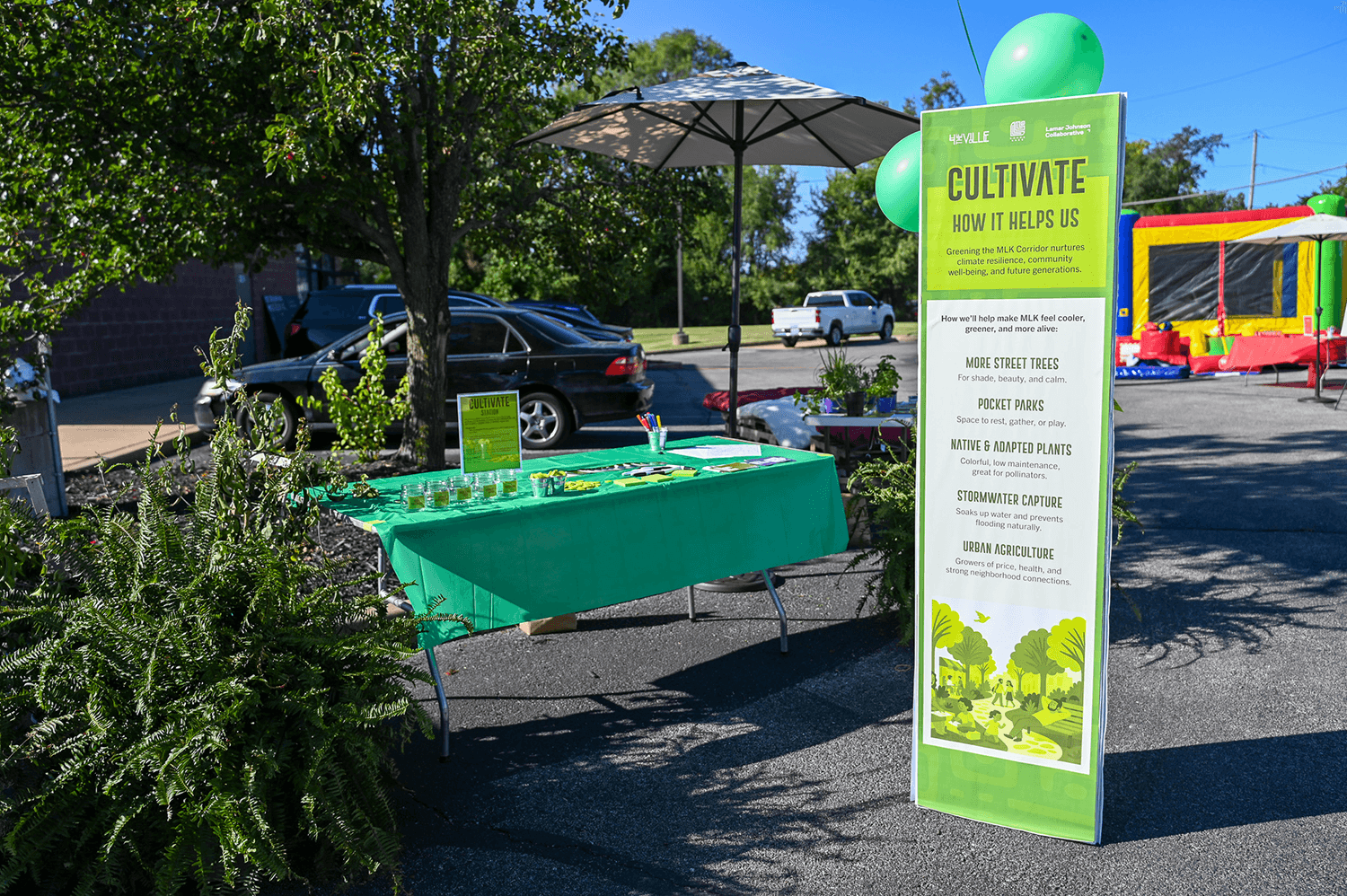
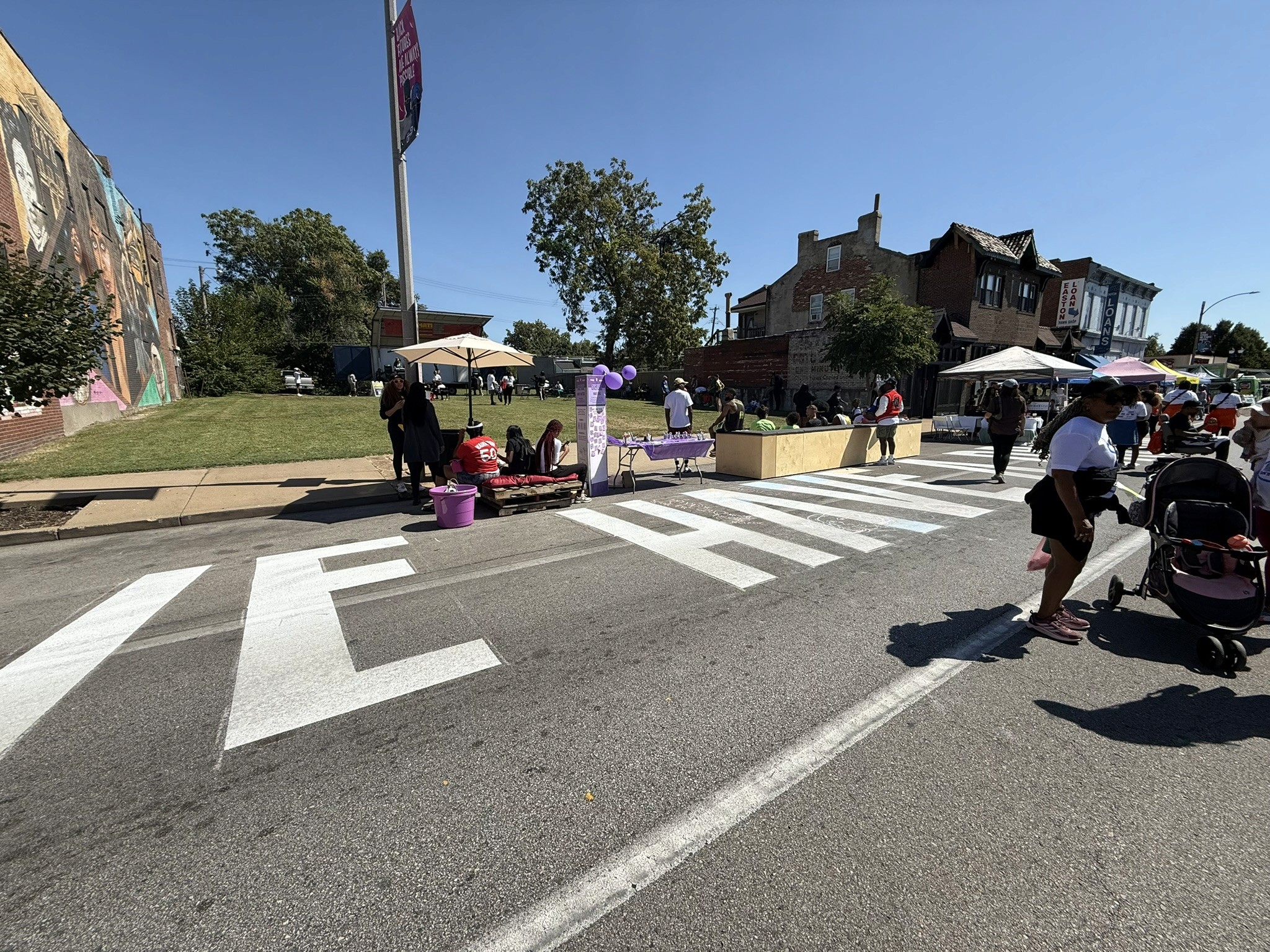
Engagement met people where they were. Workshops and charrettes through winter, spring, summer, and fall. Pop-up events that brought programming directly to the corridor. A 5K Trap Run in September 2025 drew nearly 800 runners. The BLVD Dream Planning Information Center — a permanent storefront that opened March 8, 2025 — gave the planning process a physical address on the corridor it was planning. Residents walked in, reviewed materials, asked questions, and participated. When the tornado hit two months later, the same storefront distributed supplies and stabilization resources.
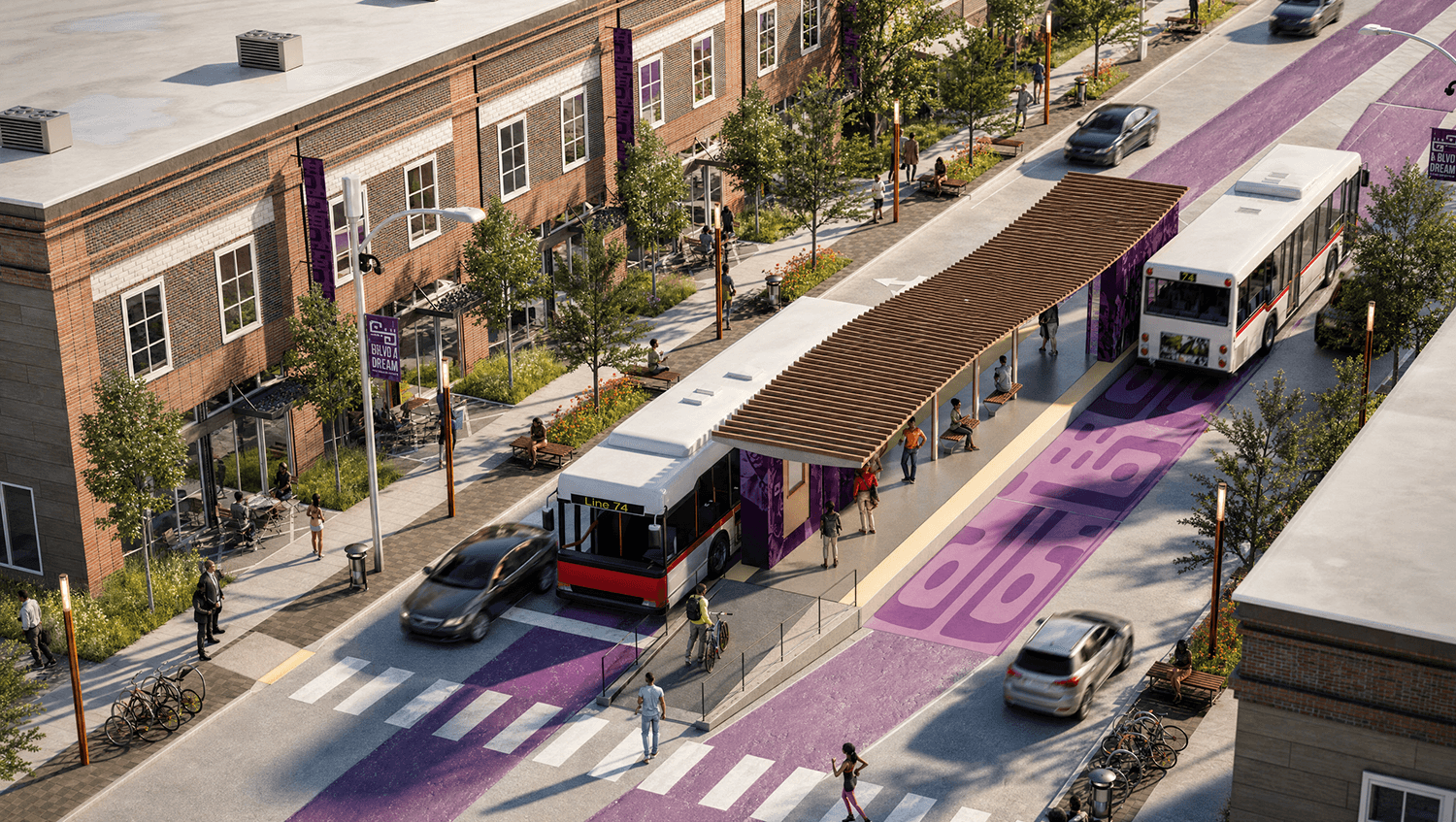
The two streetscape concepts offer real choices. The Bus Rapid Transit concept repositions MLK Drive as a mobility backbone — dedicated bus lanes, ADA-accessible platforms, shade and seating, bus stops designed as community landmarks. The Cultural Heritage Trail concept reimagines the corridor as a people-first environment — wide shaded paths, planted medians with public art and seating, native planting for stormwater management, and storytelling panels that embed meaning into movement. Both are grounded in the same analysis. The community decides which to pursue.


On May 16, 2025, an EF3 tornado damaged homes, institutions, and infrastructure across the corridor and surrounding neighborhoods. The planning team pivoted to housing stabilization, transitional infill strategies, and immediate safety needs while holding the long-range framework intact. An "After the Storm" typology toolkit supported rebuilding with community-authored standards. A plan designed to adapt under pressure did exactly that.